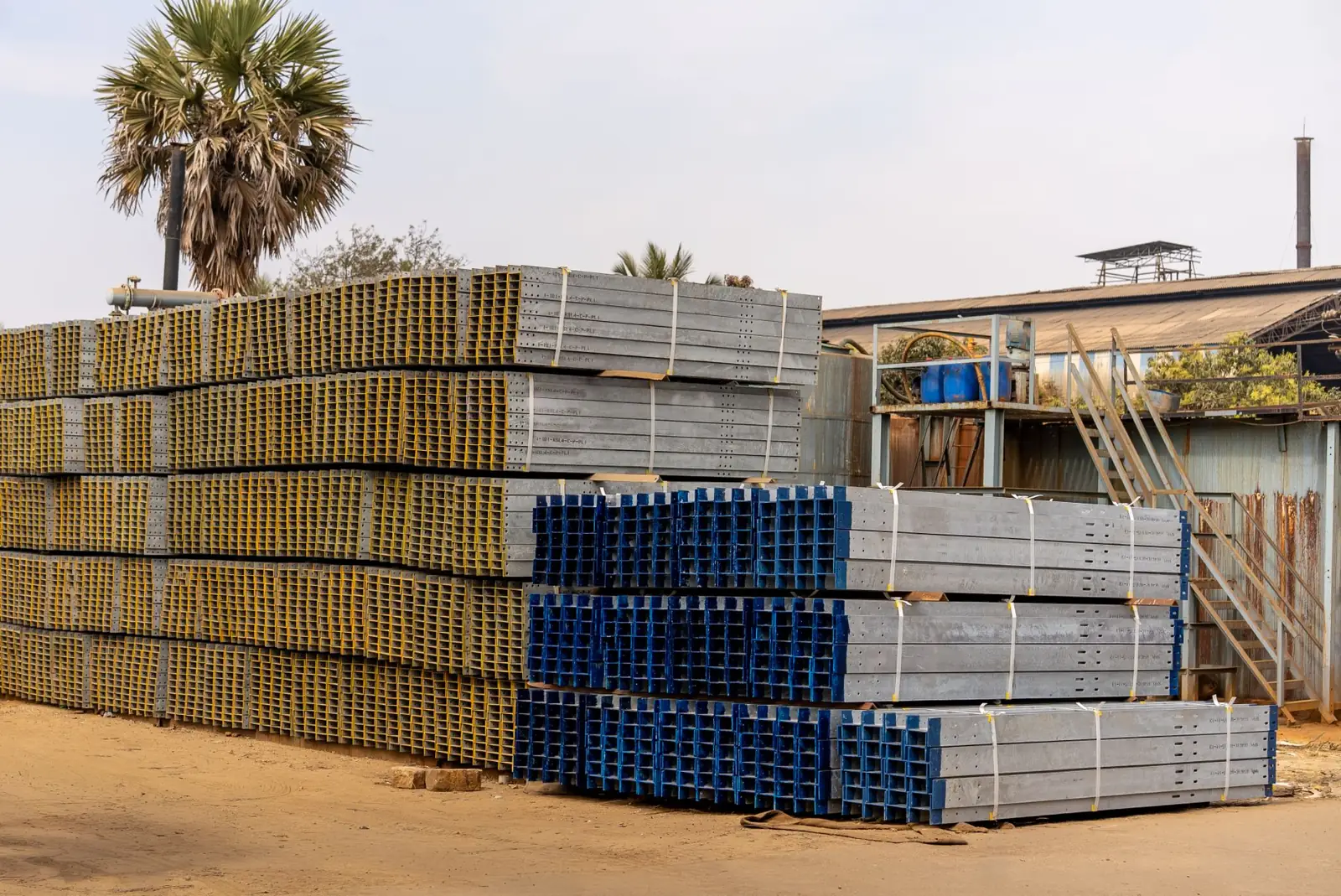
The 100% U.S. Steel or Iron rule
The domestic content bonus adds 10 percentage points to the investment tax credit (or 10% to the production credit). To qualify, a project must meet two tests. The Steel or Iron test covers structural components: 100% of the steel or iron must be melted, poured, rolled and fabricated in the United States, with no foreign share allowed. The Manufactured Products test covers everything else: a minimum share of manufactured product cost must be U.S.-made.
For ground-mount solar, the structural items under the Steel or Iron test include:
- Driven piles: W-beams, H-piles and C-piles
- Ground screws and helical pile shafts
- Fixed-tilt structural racking
- Foundation rebar in any concrete or grouted foundations
Coatings such as galvanizing applied to U.S. steel do not disqualify it, but the steel's melt and pour must be domestic. Steel melted abroad and rolled or fabricated in the U.S. does not qualify.
Safe harbor evolution
| Notice | What changed for foundations |
|---|---|
| IRS Notice 2023-38 | Created the Steel or Iron and Manufactured Products framework and named structural foundation steel as a Steel or Iron item. |
| IRS Notice 2024-41 | Added an elective safe harbor with Table 1 classifications and default cost percentages. Foundations (piles, rebar) sit under Steel or Iron; tracker drives, motors and controllers are Manufactured Products. |
| IRS Notice 2025-08 | Updated the elective safe harbor with separate ground-mount (tracking and fixed) and rooftop tables and new cell/wafer pathways. 100% U.S. melted and poured steel stays mandatory for structural piles and ground screws. |
The Manufactured Products threshold rises with the year construction begins: 40% for starts before 2025, 45% in 2025, 50% in 2026 and 55% after 2026 for land-based projects. Under the 2025 budget law, solar facilities that began construction by July 4, 2026 keep the credit on the normal continuity timeline; later starts must be placed in service by the end of 2027. Begin-construction rules also changed (IRS Notice 2025-42). Confirm your project's position with tax counsel before buying steel on domestic content assumptions.
Procurement audit checklist
- Mill test reports (MTRs) for every heat, showing the melt and pour location in the U.S. and the heat number.
- Heat-number traceability from the MTR to the fabricated pile bundle tags, through punching and cutting.
- Fabricator certificate confirming U.S. fabrication and the heats used.
- Galvanizer certificate confirming the ASTM A123 coating and the bundle and heat numbers processed.
- Ground screw and helical certificates tracing the shaft tube or bar back to a U.S. melt, not just the screw manufacturer.
- Buyer sign-off packet: a ledger of quantities by heat, matched to the as-built pile count, for the tax equity investor's counsel and the Independent Engineer.
Cost impact. 100% U.S. melted and poured steel carries a market premium of about 8–15% over blended or imported steel, depending on mill allocation. The estimator's IRA option uses $1.14/lb against $1.02/lb standard domestic.